

Some of the biggest businesses online don't sell anything themselves.
They connect people who have something with people who want it. Sellers and buyers. Freelancers and clients. Owners and renters. Then they take a small cut of every deal.
That's an online marketplace. And you can build one for a niche you know, without code and without a big budget.
This guide walks you through it step by step, using Martsi, an AI-powered marketplace builder.
What Is an Online Marketplace?
An online marketplace is a website where many independent sellers list products or services, and buyers shop from all of them in one place.
You run the website. Sellers bring the products, services or rentals. Buyers pay through your site, and you earn a commission or fee on each sale.
You never hold stock, ship boxes or do the service yourself. That's what makes marketplaces such a light, scalable business.
Why Start a Marketplace?
- No inventory. Sellers own everything they sell.
- Low costs. Your main cost is the software.
- Many ways to earn. Commissions, buyer fees, subscriptions, listing fees and paid placements.
- It grows itself. More sellers bring more buyers, and more buyers attract more sellers.
- Built-in content. Every listing is a new page that search engines can find.
And there are still thousands of niches without a good marketplace. That's your opening.
Your 7 Step Launch Plan
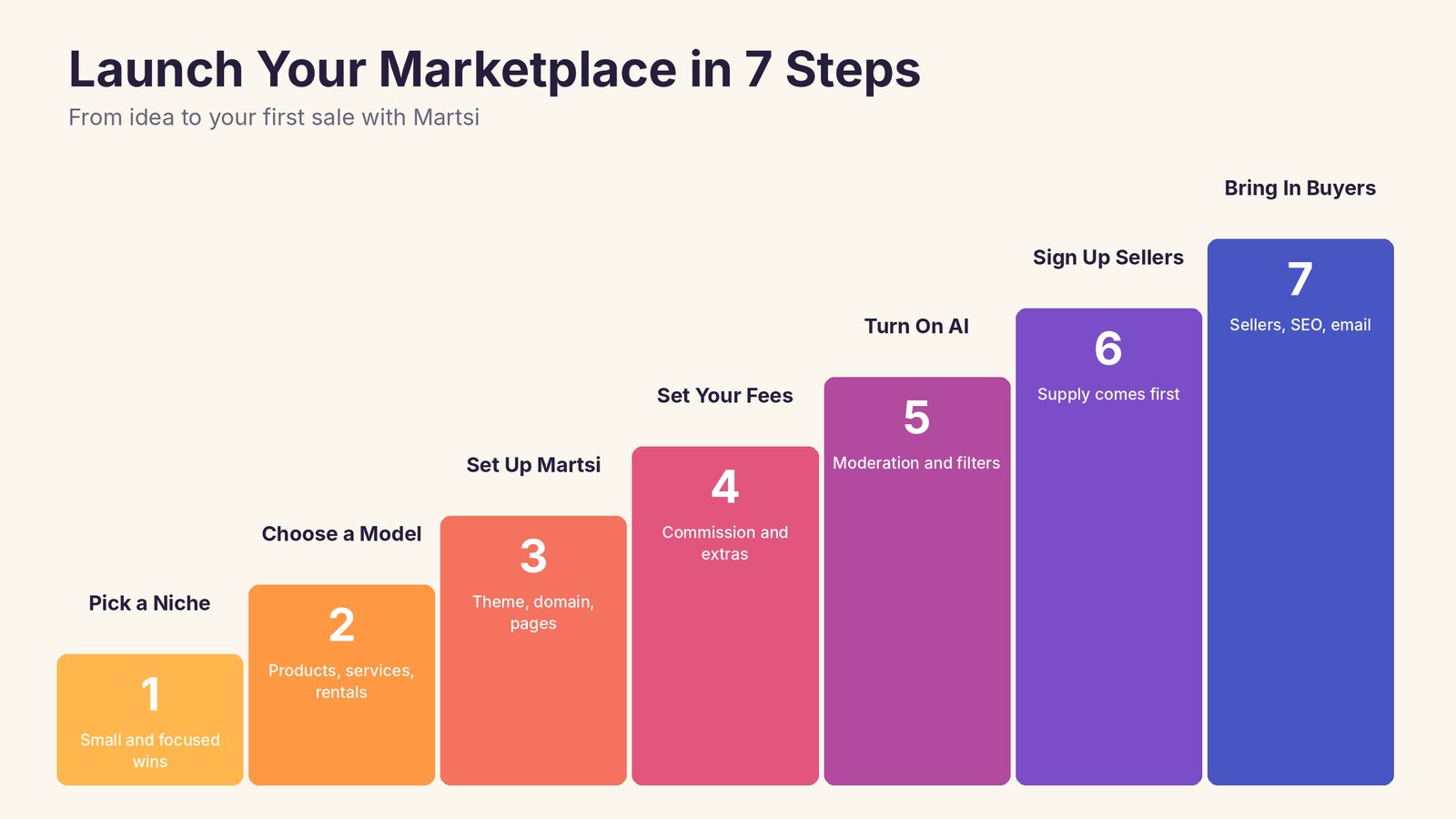
Here's the whole journey at a glance. Let's go through each step.
What You Need Before You Start
Less than you think.
- A niche you understand. You'll pick this in Step 1.
- A Martsi account. It handles hosting, payments setup, moderation and the marketplace itself.
- A domain name. Optional, but it makes your marketplace feel like a real brand.
- A few hours a week. Mostly for talking to sellers and promoting the site.
No developers, no servers and no stock. That's why marketplaces are one of the easiest big ideas to test.
Step 1. Pick a Narrow Niche
This is the most important decision you'll make.
Don't try to build the next Amazon. Build the best marketplace for one specific group of people. A narrow niche is easier to explain, easier to market and much easier to win.
- Local services. Cleaners, handymen or tutors in your city.
- Hobby gear. Used camera lenses, musical instruments or fishing gear.
- Rentals. Party supplies, camping gear or tools in your area.
- Digital goods. Templates, presets or courses for one profession.
- Handmade products. Crafts from one region or for one type of buyer.
Pick something you know. You'll understand the sellers, speak the buyers' language and spot problems faster.
Local niches are especially strong. A marketplace for one city has little competition, and you can meet sellers face to face. Once it works in one place, copy it to the next town.
A quick test. Can you name ten sellers who might join today? If yes, it's a strong niche.
Step 2. Choose Your Marketplace Model
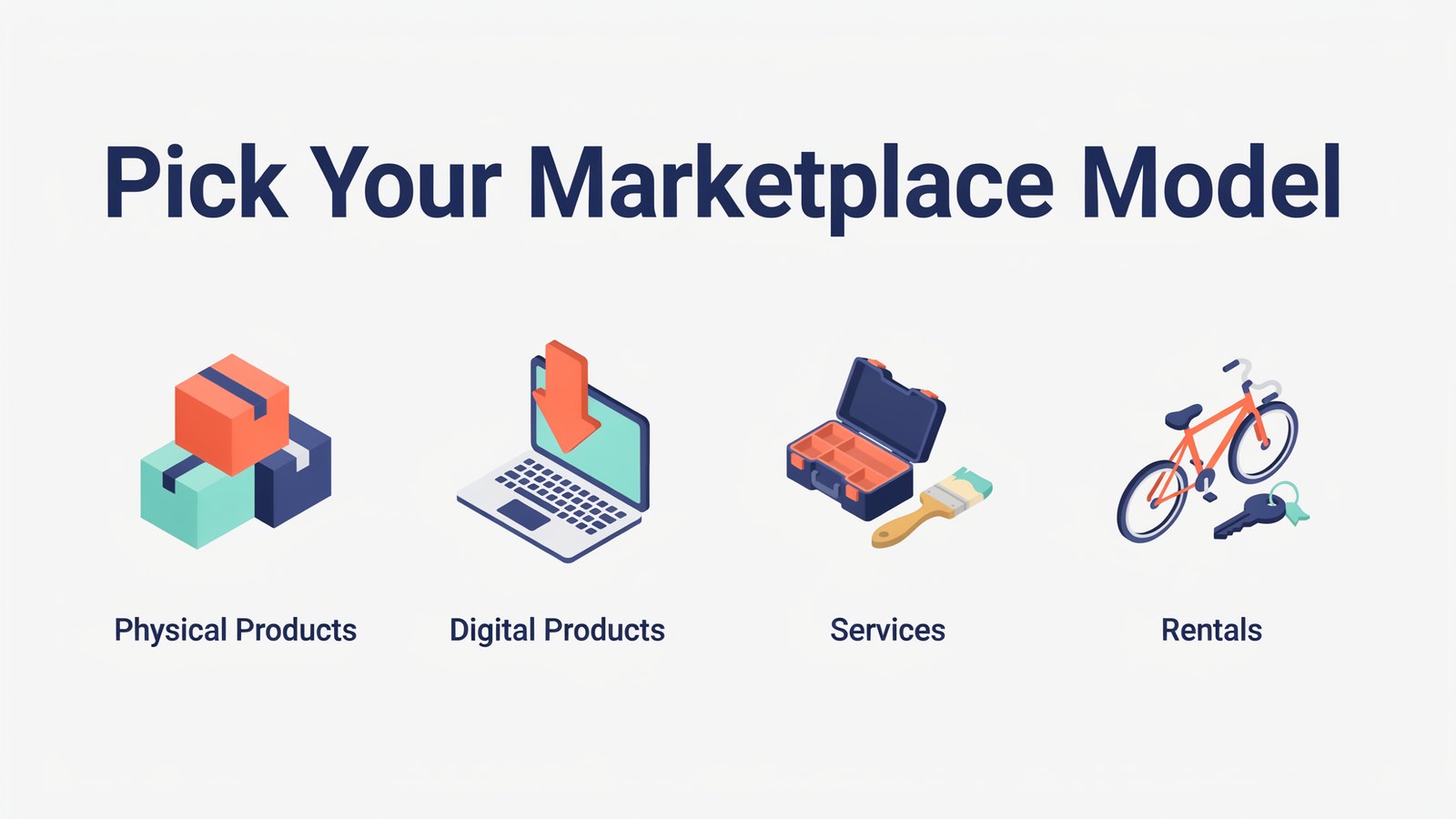
Martsi supports all four main models in one platform.
- Physical products, like Etsy. Sellers ship items to buyers.
- Digital products, like Gumroad. Files are delivered instantly.
- Services, like Fiverr or TaskRabbit. Sellers do a job for the buyer.
- Rentals, like Airbnb or Turo. Buyers book an item or space for a period of time.
Start with the one that fits your niche best. You can always expand later.
Step 3. Set Up Your Marketplace With Martsi
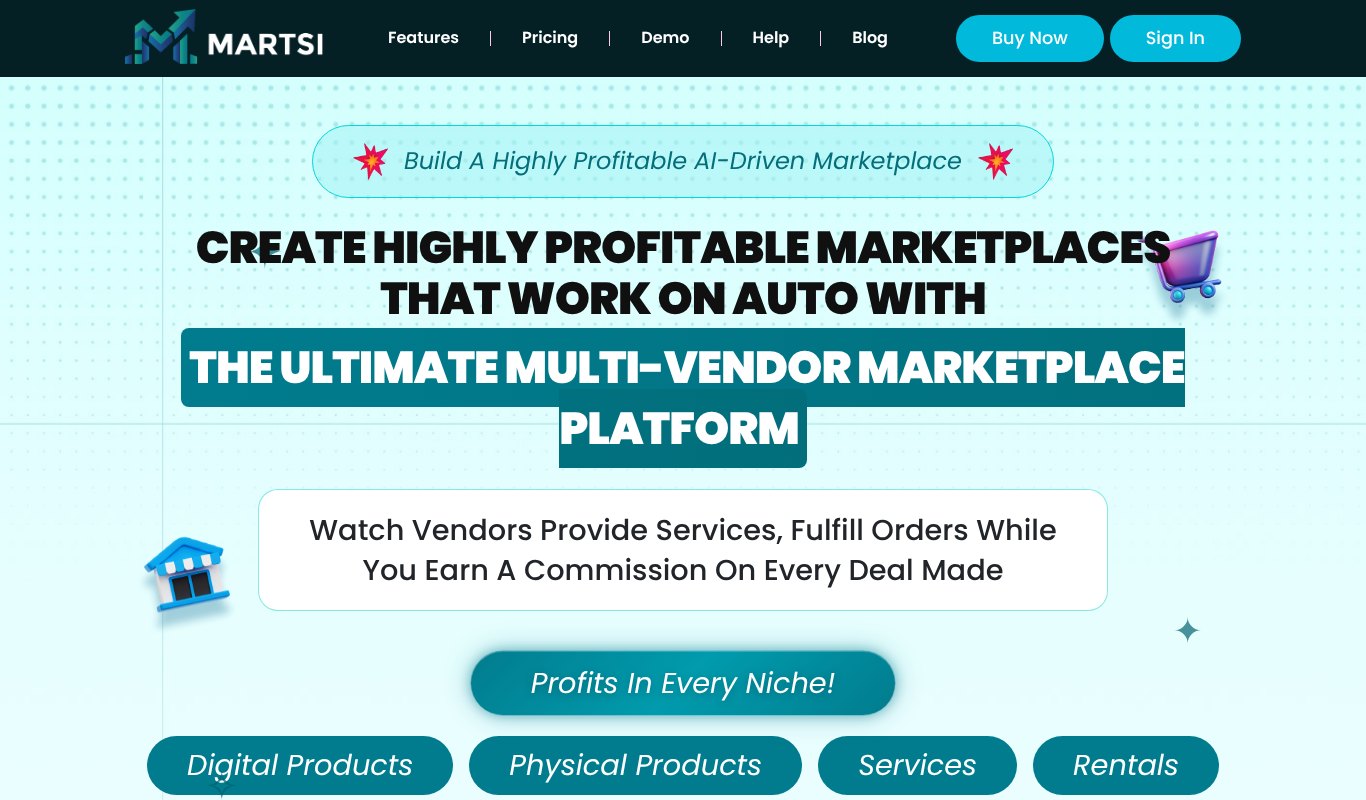
Martsi is a fully hosted marketplace platform. There's nothing to install and no server to manage.
You pick your model, choose a theme and customize your storefront. Point your own domain at it so it carries your brand. Martsi can even help you build a custom home page with AI.
Keep the first version simple. A clear home page that says who the marketplace is for, a few categories and an easy way for sellers to join.
Martsi costs $5.58 a month, paid yearly ($67 a year), or $6.99 month to month. The plan covers 1 marketplace with up to 200 sellers, 4,000 buyers and 600 products, which is plenty to launch and prove your idea. There's a 30 day refund.
Step 4. Set Your Fees
Decide how you'll make money. Martsi gives you several options, and you can mix them.
- Seller commission. A percentage of every order. 10 to 20 percent is common.
- Buyer fee. A small service fee at checkout.
- Vendor subscription. A monthly fee for sellers to list.
- Listing fees. A few listings free, then a small fee for more.
- Featured listings and ads. Sellers pay to appear at the top.
- Dispute fees. A small fee for handling disputes.
At the start, keep it simple and low. One commission rate is enough. Sellers join more easily when they only pay when they make a sale.
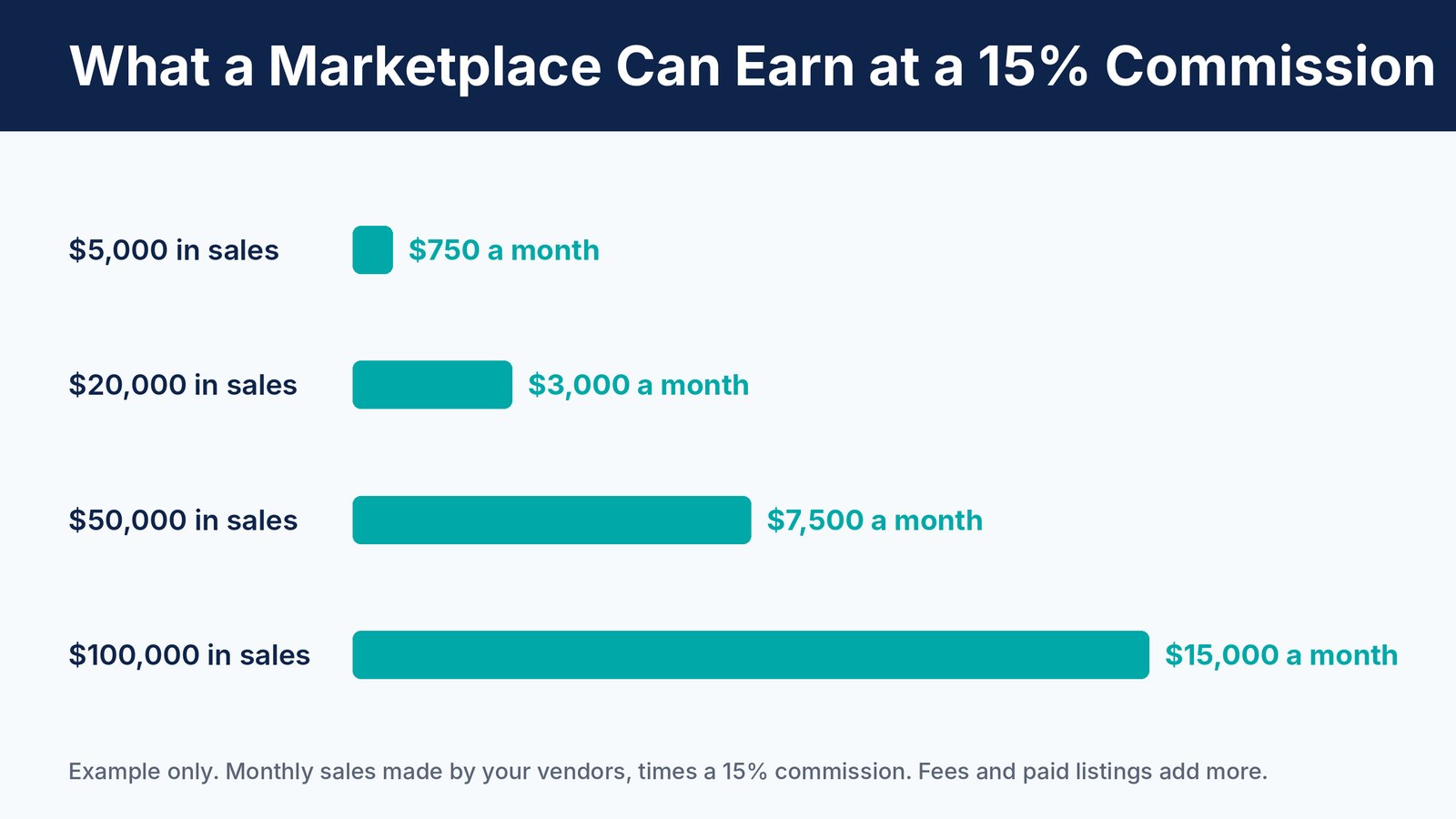
Here's the simple math. If your sellers make $20,000 in sales a month and you take 15 percent, you earn $3,000 a month, before any other fees.
How to pick your commission rate
| Marketplace Type | Typical Commission | Why |
|---|---|---|
| Physical products | 8 to 15% | Sellers have product and shipping costs |
| Digital products | 10 to 30% | No shipping, high margins for sellers |
| Services | 10 to 20% | You bring them clients they couldn't find alone |
| Rentals | 10 to 20% | Owners earn from items they already have |
These are rough ranges, not rules. Check what sellers in your niche already pay elsewhere and come in a little lower at launch.
Step 5. Turn On the AI
Running a marketplace used to mean checking every listing and message by hand. Martsi's AI does most of that for you.
- AI listing moderation screens new listings for spam, scams and low-quality offers before they go live.
- AI message moderation watches conversations for abuse and spam.
- AI contact info filter stops buyers and sellers from swapping phone numbers or emails to make deals off your site, so you keep your commission.
- AI listing enhancer helps sellers polish their titles and descriptions.
- AI communication helper helps sellers write clear, professional replies to buyers.
There's also a Martsi MCP connection, so you can check orders, approve sellers and handle disputes right from Claude or ChatGPT.
Step 6. Sign Up Your First Sellers

Here's the part most new marketplace owners get wrong. They launch and wait for buyers.
But buyers only come when there's something worth buying. So sellers come first.
- Make a list of 50 sellers in your niche. Local shops, freelancers, makers and people already selling on social media.
- Reach out personally. Explain who the marketplace is for and why it helps them.
- Offer free early access. No fees for the first few months is a strong reason to try.
- Help them list. Set up their first listings with them. The AI listing enhancer makes this quick.
- Aim for 10 to 20 great sellers before you promote to buyers.
Ten active sellers with great listings beat a hundred empty profiles.
Treat your first sellers like partners. Check in often, share what you learn and celebrate their first sales on your social pages.
Step 7. Bring In Buyers
Now you have something worth visiting. Time to bring people in.
- Let sellers promote you. Give them badges and links to share with their own customers. Every seller brings their own audience.
- Search traffic. Every listing is a page that can rank. Better listings mean more visitors over time.
- Email. Everyone who signs up, asks a question or buys joins your list. Martsi lets you send email broadcasts right from your marketplace.
- Local and community promotion. Post in groups where your buyers hang out.
- Referral rewards. Give buyers a small bonus for inviting a friend.
Keep checking what brings buyers in, and do more of it.
Set Simple Rules That Build Trust
Buyers need to feel safe before they pay a stranger. Sellers need to know how they'll be treated. A few clear rules do both.
- What can be listed. And what can't. Be specific for your niche.
- How payments and payouts work. When sellers get paid and what your fee is.
- Refunds and cancellations. Especially for services and rentals.
- How disputes are handled. Martsi has dispute management built in, with AI help to review each case.
- Reviews. Every completed order should be reviewable. Honest reviews build trust faster than anything you say.
Put these rules on one simple page and link to it from your footer and seller sign-up page.
Your First 30 Days
- Days 1 to 3. Pick your niche and model. Set up Martsi, your domain and your home page.
- Days 4 to 7. Set your fees, write your rules and turn on AI moderation.
- Days 8 to 20. Contact 50 potential sellers. Help the first 10 to 20 create great listings.
- Days 21 to 25. Ask sellers to share the marketplace. Post in local and online communities.
- Days 26 to 30. Send your first email to everyone who signed up. Review what worked and plan month two.
By the end of the month you'll have a live marketplace, real sellers and your first buyers. That's a real business.
How to Grow After Launch
Once sales start, focus on three things.
- Keep quality high. Remove inactive or poor sellers. Buyers return to marketplaces they trust.
- Add more sellers in your niche. More choice means more reasons to visit.
- Add new ways to earn. Featured listings and seller subscriptions work well once you have traffic.
Read your reviews and disputes. They tell you exactly what to fix.
And talk to your best sellers every month. Ask what would help them sell more. Their answers often point straight to your next feature, category or promotion.
A Quick Example
Let's say Sam loves photography and lives in a big city.
Sam starts a rental marketplace for camera gear on Martsi. Local photographers rent out lenses and lights they rarely use. Sam signs up 15 photographers in the first month by visiting camera clubs and posting in local photography groups, with three months free.
Each photographer shares the marketplace with their followers. Listings start showing up in local searches for "camera rental". By month four, rentals are bringing in steady commissions, and photographers in a nearby city are asking to join.
One niche. One city. A small, real business that grows on its own.
Mistakes to Avoid
- Going too broad. A marketplace for everything competes with giants.
- Launching with no sellers. Get supply first, then buyers.
- Charging too much too soon. Keep fees low until sellers are earning.
- Skipping moderation. One scam can scare buyers away for good.
- Letting deals leave the site. Use the contact info filter so you keep your commission.
- Building forever before launching. Start small and improve as you go.
Frequently Asked Questions
How much does it cost to start an online marketplace?
With Martsi, you can start for $67 a year, including hosting. A custom-built marketplace can cost tens of thousands of dollars.
Do I need to know how to code?
No. Martsi is point and click, and the AI handles moderation and listing help.
Can I build a rental or service marketplace?
Yes. Martsi supports physical products, digital products, services and rentals.
How do I get my first sellers?
Reach out personally to people already selling in your niche, offer free early access and help them create their first listings.
Can I use my own domain?
Yes. You can point your own domain at your Martsi marketplace and brand it as your own.
Which marketplace software should I use?
It depends on your budget and needs. We compared the options in our guide to the best multi-vendor marketplace software.
How long does it take to make money?
Many marketplaces see their first commissions within weeks of launch, once sellers are active. Steady income usually takes a few months of adding sellers and bringing in buyers.
Final Thoughts
Starting an online marketplace is easier than ever. Pick a narrow niche, sign up great sellers, and let them bring the buyers.
You don't need developers or a big budget. Start your marketplace with Martsi and launch in an afternoon.